
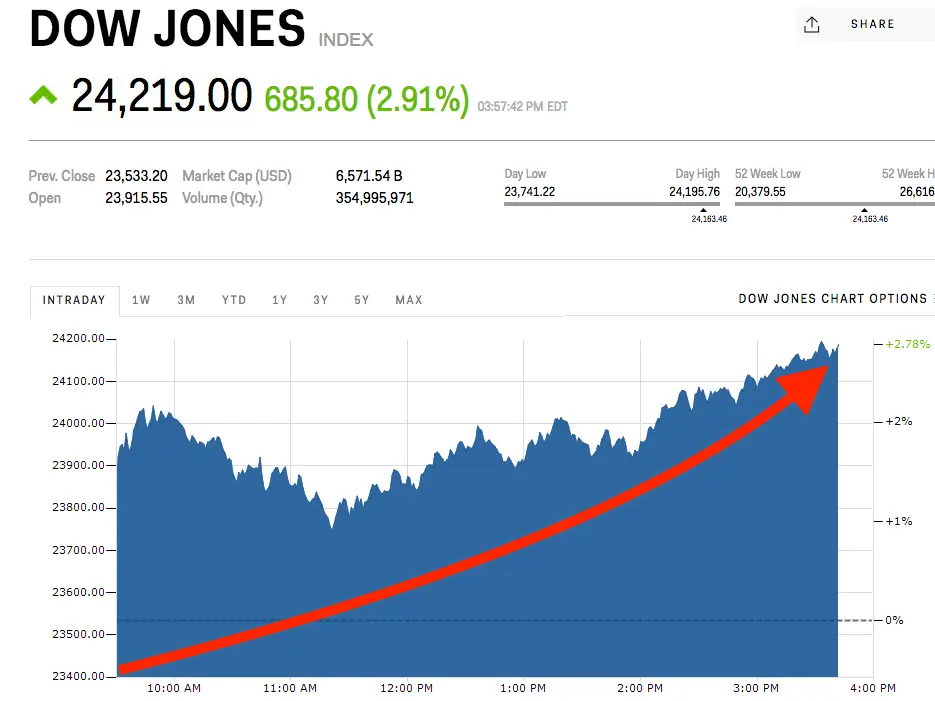
Every trading morning in India begins not with the opening bell but with a quiet act of interpretation. Before domestic markets stir to life at nine-fifteen, experienced traders are already studying the signals embedded in overnight global market activity. SGX Nifty — now traded as GIFT Nifty at the GIFT City International Financial Services Centre — gives a forward-looking indication of where Indian indices are likely to open based on how participants have been pricing Nifty futures through the night. Separately, the Dow Jones Industrial Average, the iconic measure of blue-chip equity performance from global markets, has long served as a broad barometer of international investor risk appetite that invariably colours the mood of Indian markets each morning. Together, these two indicators form part of a daily interpretive ritual that separates reactive investors from those who genuinely understand the architecture of global market linkages and their specific implications for Indian equities.
Why Indian Markets Do Not Open in Isolation
The idea that Indian equities move purely on domestic fundamentals is appealing in its simplicity but inaccurate in practice. India’s financial markets are deeply integrated into the global capital ecosystem. Foreign portfolio investors hold significant stakes across Indian large-cap stocks, and their collective decisions are influenced by how they are managing risk and return across their entire international portfolios — not just their India allocations.
When global risk sentiment shifts — regardless of the cause — these large institutional investors often move capital in a coordinated direction. Risk-on environments, where confidence is high and appetite for growth assets is strong, tend to bring net inflows into Indian equities. Risk-off environments, where caution prevails and capital retreats toward stability, tend to trigger outflows. This transmission mechanism is what connects overnight moves in global indices to the opening direction of the Sensex and Nifty each morning.
The Dow as a Global Mood Ring
The Dow Jones Industrial Average, which represents a narrow slice of the global fairness universe, encompasses tremendous psychological significance in financial markets worldwide. Its thirty component companies are some of the most respected groups on the planet; its daily performance serves as a global proxy for corporate leverage
When this threshold closes higher at any time of the night, it often indicates that members of global markets are feeling creative, usually indicating worries about revenue, usually monetary stimulus or the political environment when it falls sharply and that the problem is entering time zones with top-level performance. By the time Indian markets open the next morning, this sentiment is already partially absorbed into index futures pricing, showing the difference between domestic markets verifying or vice versa as sparkling entrants enter the picture.
Understanding this date does not robotically predict that Indian markets will mirror global actions overnight. It has to have a framework to ask the right questions: Is the global flow driven with the help of one thing that actually affects the profits of Indian companies? Or emotion-driven swings that India’s own history of household growth can moderately insulate against?
When India Decouples From Global Trends
Not every international market decline reveals reverberations in Indian equities, and this selective decoupling is one of the most important events for domestic investors. There are periods when Indian markets show unprecedented resilience to international weakness, aided by strong domestic institutional financial stability — especially through a meastratory SIP the pressures affecting other aspects of the global financial system
The maturity of the domestic institutional investor base in India has been an important goal in building this flexibility. While foreign portfolio investors flip sellers in response to global opportunity bumps, domestic mutual fund insurance companies — operating through steady trading flows — can soak up much of that selling stress and keep those index corrections from turning into a self-reinforcing crash.
India is perhaps unlikely to decouple, as knowing miles perhaps to move in sympathy with an international weak spot requires knowledge of what it really uses global communication, what India’s own macro situations look like at that moment, and how it depends on foreign participation.
Crude Oil as the Critical Connecting Variable
Of the various ways in which international market sentiment affects Indian stocks, crude oil tariffs are perhaps the most immediate, and consequently, India imports an overwhelming share of its power needs, making the domestic economic system especially touchy for global oil price actions.
As international de-risking factors lead to lower prices of energy commodities — namely crude oil — India could all but benefit from a reduction in its import bills as foreign markets face strain from foreign outflows. Conversely, while international growth optimism is driving crude oil prices higher in equity markets, inflationary pressures in India may partially offset the overwhelming sentiment of rising global benchmarks.
This subtle relationship means that a rising global market is not automatically high quality for Indian stocks in all scenarios, and a falling global market is not mechanically catastrophic. The composition of the global phase, and in particular what it means for Indian investment prices, is extraordinarily important.
Using Global Signals Without Being Enslaved to Them
The discipline that serves Indian investors best treats global benchmark signals as context rather than instruction. The overnight direction of index futures and global equity markets tells you something about the emotional state of the market at open — whether participants are feeling cautious or confident, whether there is likely to be aggressive selling or buying pressure in the first hour of trade.
What these signals cannot tell you is whether a specific Indian company with sound fundamentals, honest management, and a durable competitive position is a good investment at its current valuation. That judgment requires entirely different tools — financial statement analysis, understanding of the competitive landscape, assessment of management capital allocation history, and a view on the long-term trajectory of the industry the company operates.
Long-term wealth in Indian equities has consistently been built by investors who used global signals to inform their timing without allowing short-term global sentiment to override their fundamental convictions about the businesses they own. That balance — informed by global context but anchored in domestic fundamentals — is the hallmark of durable, sophisticated investing in the Indian market.