
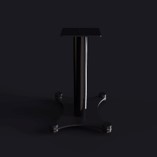
A premium loudspeaker can reproduce remarkable detail, yet its performance may suffer when positioned on an unsuitable table or unstable shelf. Support accessories influence speaker height, physical stability, and the direction in which sound reaches listeners. Carefully selected speaker stands and mounts help address these considerations without requiring expensive electronic upgrades. Their value becomes particularly noticeable in stereo listening systems and dedicated home theaters where precise speaker positioning matters. Understanding how support design affects everyday listening helps us make informed improvements to existing entertainment equipment.
Correct Speaker Height Influences Listening Accuracy
Loudspeaker designers typically establish a preferred listening axis based on driver arrangement and dispersion characteristics. Positioning the tweeter near seated ear level is often a useful starting point for conventional stereo speakers. When speakers sit substantially above or below this position, their tonal balance and perceived imaging may change. Dedicated stands offer a practical way to establish appropriate heights without relying on existing furniture dimensions. We should examine manufacturer recommendations, actual seating height, and speaker geometry before choosing support equipment for a particular listening environment.
Stable Foundations Limit Unwanted Movement
Loudspeakers produce mechanical vibrations as their drivers move, making a secure supporting surface important. An unstable table or lightweight shelf may rattle or transmit vibrations to nearby objects, particularly during demanding bass passages. Well-constructed stands provide a rigid foundation and reduce the likelihood of unwanted movement. However, their effectiveness depends on construction, floor conditions, and the supported speaker’s weight. We should evaluate base dimensions, load capacity, and available leveling adjustments rather than assuming that every heavy stand automatically delivers superior acoustic performance.
Proper Positioning Supports Stereo Imaging
A convincing stereo presentation depends on maintaining appropriate relationships between loudspeaker positions and the listening area. Unequal distances, excessive furniture obstruction, or unsuitable angles can weaken the perceived separation of instruments and vocals. Dedicated stands allow speakers to occupy positions that may be impractical on conventional cabinets. When evaluating speaker mounting solutions, we should consider placement flexibility alongside physical compatibility. Small adjustments in spacing and orientation can sometimes produce more noticeable improvements than purchasing additional electronics without correcting the existing room arrangement.
Dedicated Center Stands Improve Placement Flexibility
Center-channel speakers reproduce much of the dialogue in multichannel movie soundtracks, making their positioning especially important. Placing a center speaker too low or concealing it inside furniture may affect sound direction and clarity. The Focal Vestia Center Channel Speaker Stand, designed for compatible Theva and Vestia center speakers. Its tilted construction helps direct sound toward the listening area. We should confirm model compatibility and consider screen height, viewing distance, and nearby furniture before selecting any specialized center-channel support.
Manufacturer Compatibility Protects Premium Equipment
Not every speaker can safely use a universal stand or mounting arrangement. Cabinet dimensions, weight distribution, fastening points, and manufacturer-specific designs influence compatibility. Available designs include Focal Theva/Vestia N°1 stands alongside Perlisten Audio R-Series and S-Series options intended for selected loudspeaker models. Dedicated accessories can provide appropriate support while complementing the equipment’s appearance. We should verify exact model numbers and included hardware before ordering. A visually compatible product is not necessarily mechanically suitable, especially when secure attachment requires particular fittings or mounting dimensions.
Floor Conditions Affect Installation Stability
The surface beneath a speaker stand can influence both safety and mechanical performance. Carpeted floors, hardwood surfaces, and uneven tiles present different installation requirements. Some stands include spikes or protective feet intended for particular flooring conditions. Spike use should follow manufacturer guidance, particularly where delicate surfaces could become damaged. We should also consider children, pets, walking routes, and accidental contact when selecting installation locations. Proper leveling and secure placement help maintain consistent speaker alignment while reducing avoidable risks to equipment and surrounding furnishings.
Practical Design Complements Everyday Living
Audio accessories should support the listening experience without creating unnecessary inconvenience. Stand dimensions, finishes, cable routing, and accessibility all affect how naturally equipment fits within residential interiors. A carefully organized installation can reduce visible cables while preserving space for maintenance and future adjustments. Premium options from Focal and Perlisten illustrate how dedicated supports can combine functional construction with coordinated styling. We should prioritize dependable compatibility and sensible placement over appearance alone. An effective arrangement supports regular listening while respecting the room’s existing furniture and layout.
Conclusion
Improving a listening system does not always require replacing its most expensive components. Appropriate height, stable positioning, and compatible support equipment can help existing loudspeakers perform as intended while protecting them from avoidable installation problems. Through its Focal and Perlisten Audio accessories, epicsystems.tech provides options for homeowners refining stereo and home cinema arrangements. Before selecting new hardware, measuring the listening position and confirming speaker compatibility can reveal which support configuration best suits the room and provides lasting practical value.
Frequently Asked Questions
Q1. Should tweeters always be positioned at ear height?
Ear-level alignment is a common starting point for stereo systems, but the manufacturer’s listening-axis guidance takes priority.
Q2. Will speaker stands automatically improve bass?
No. They may change placement and reduce unwanted rattles, but bass response still depends on speakers and room acoustics.
Q3. Are universal stands safe for every speaker?
No. Verify load capacity, platform dimensions, stability and any required model-specific fixings.
Q4. Can speaker spikes damage wooden floors?
Yes. Use suitable protective feet or discs where recommended by the stand and flooring manufacturers.
Q5. Why use a dedicated center-channel stand?
It can provide stable support and a suitable listening angle when conventional furniture positions the speaker poorly.